How Do Credit Bureaus Get My Credit Data?

Highlights:
- Lenders send credit and account data to Equifax®, Experian® and TransUnion®.
- When you apply for a new loan or credit card, a lender may use the information in your credit reports.
- Credit reporting agencies do not make lending decisions.
- Lenders often use credit scores to help them determine your credit risk.
A good credit score has many benefits beyond lower interest rates. You can potentially gain access to better lending options for housing and credit cards that offer perks and rewards. Many people may not know that they have more than one credit score. There are several factors that go into credit scoring calculations.
These include:
- payment history
- length of credit history of active accounts
- credit utilization — the percentage of your total credit used from the total credit available to you
- credit mix — different types of credit accounts
- hard inquiries
- recent credit behavior — how many new credit accounts you have opened recently
There are many different credit scores and each is calculated differently. Credit scores will vary for several reasons. But it often is due to how lenders report data to the U.S. nationwide credit reporting agencies — Equifax, Experian and TransUnion.
What is in a credit report?
Your credit reports are a roadmap of how well you manage your debts and loans. They contain details on the different types of accounts and your payment history. Credit and account information comes to the NCRAs from your lenders and creditors. The lenders and creditors send information that includes the types of accounts, length of credit history and your credit limit or loan amount. Equifax also obtains public information about bankruptcies.
The information in your credit report is used to calculate your credit scores. Credit scores are generated using sophisticated models and algorithms that are often designed by third-party scoring companies. Lenders often use credit scores to help them determine your credit risk. NCRAs do not make lending decisions. NCRAs, like Equifax, calculate credit scores based on information in your credit reports. Equifax, Experian and TransUnion use different credit scoring models.
Where does the information in my credit report come from?
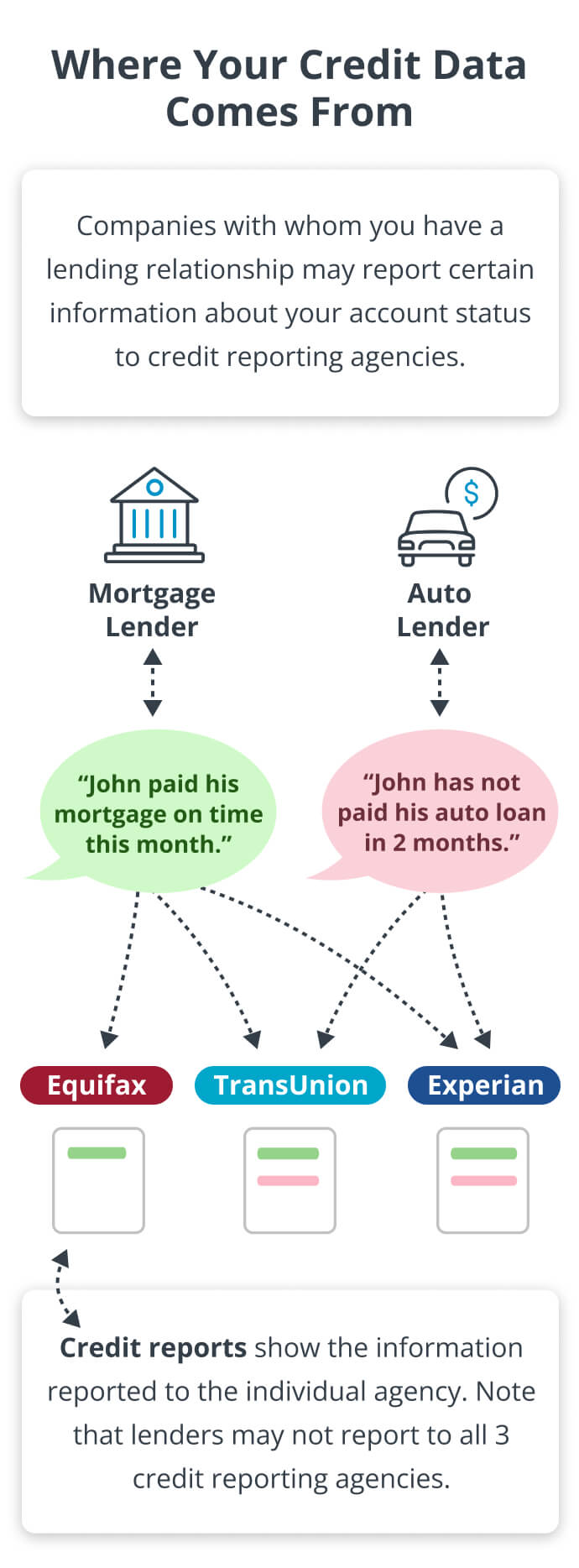
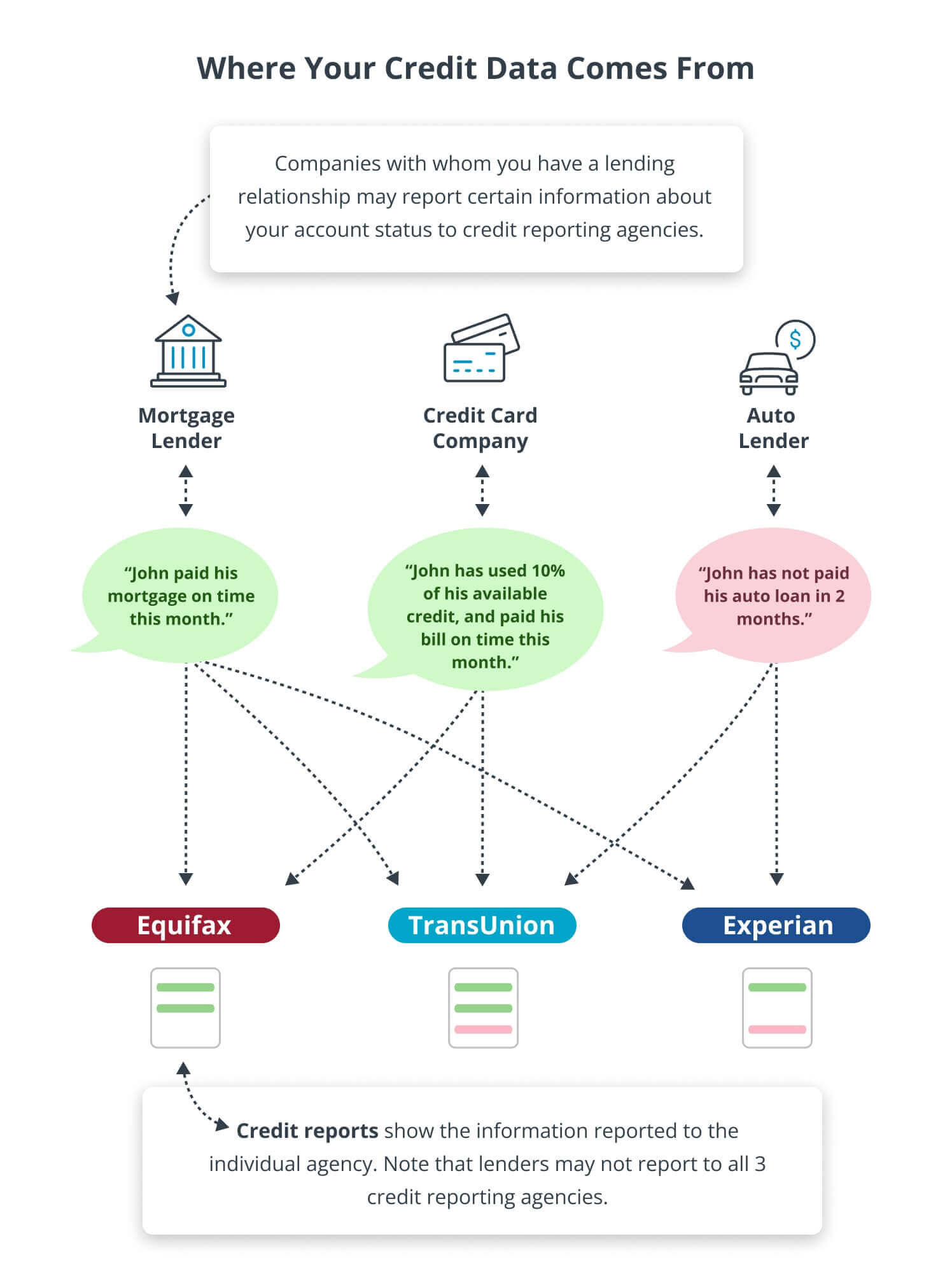
The information on your credit reports comes from your lenders and creditors. This can include banks, credit card companies, and mortgage and auto lenders. They send account information to the three U.S. NCRAs. Credit bureaus collect and maintain a history of your credit activity from your lenders. New lenders will then look at your credit reports when you apply for a new loan or credit card.
Lenders and creditors use data in credit reports to help them make lending decisions. The decision to deny or approve an application lies with the lender or creditor. Each lender and creditor may have its own criteria for decisions. When you apply for a new loan or credit card, a lender has to determine if they should lend you money and at what interest rate. They may use the information in your credit report as well as their own criteria to make that decision.
Do lenders have to report to all three NCRAs?
Not all lenders and creditors report to all three nationwide credit reporting agencies. Some may report to two, one or none at all. If a credit card company reports to the three NCRAs, there's no set day, time nor frequency. Creditors are not required by law to report at all. It's a voluntary practice, so it's up to them to decide when and how often they do it. This also means that some companies may not report to any of the NCRAs. You can call your lender to ask when they report.
How to access your Equifax credit report
Checking your credit reports can help you be more aware of what lenders may see. You can receive free Equifax credit reports with a myEquifax™ account. You can also get free credit reports from the three NCRAs at AnnualCreditReport.com. For more peace of mind, you can sign up for Equifax Complete™ Premier. This gives you annual access to your credit reports from all three NCRAs. Plus, it provides identity theft protection with Dark WebScan.
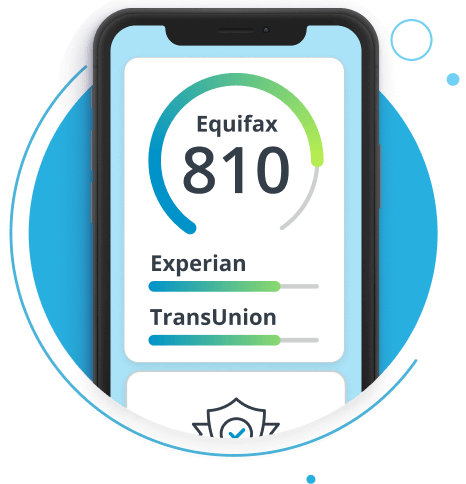
Don't wait another day to build your credit confidence. With Equifax Complete™ Premier, know where you stand with access to your 3-bureau credit report.
Related Content